
Hard rock crushing is easier to understand if the crusher is thought of as a process of controlled compression. There is more to it than a powerful machine with a discharge belt. The question worth asking is how the rock gets through the chamber, and exactly where its size is controlled. Then there is the question of why a steady feed can matter as much as motor power. This article takes that practical view.
The Crushing Chamber Does the Real Work
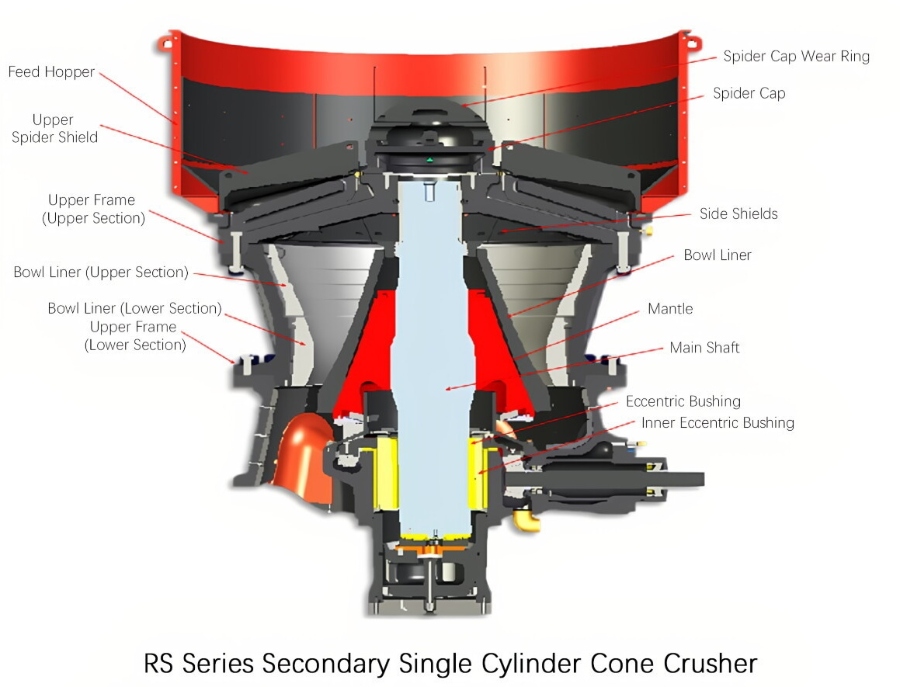
Between the moving mantle and fixed concave of a cone crusher, hard rock is squeezed until it breaks into smaller pieces. The mantle does not spin like a drill bit; its path is eccentric. That movement makes the chamber narrower and then wider as the stone passes down through it. This repeated compression breaks larger particles while smaller material continues toward the discharge.
El working principle of hydraulic cone crusher equipment thus depends on keeping the gap movement under control. Material gets crushed in the smallest part of the gap. As the gap opens, the material is released again. In hard rock crushing, the repeated movement produces reduction without the need for one sharp impact point.
Interparticle pressure shapes the product
With enough feed in the chamber, stones push against one another as well as against the liners. This interparticle action can improve particle shape because the rock breaks at several points of contact. A thin or uneven feed layer reduces that effect and can make the product harder to predict.
The feed must match the chamber
A chamber cannot correct every upstream problem. Blocks that are too large can cut capacity and cause more uneven liner wear. Too much fine material, on the other hand, may pack inside the chamber and put more stress on the machine. Regular feed sampling gives the operator a clearer explanation for any change in product size.
Control Comes from CSS, Feed, and Chamber Shape
Closed side setting, usually called CSS, is the narrowest distance between the mantle and concave near the discharge zone. A tighter CSS generally moves the product finer, but it can also increase power demand and circulating load. With a wider setting, capacity may go up, but the screen gets a coarser product.
Hydraulic adjustment makes the setting easier to control, since the machine can respond more exactly than with a purely mechanical change. The value of this becomes clearer when keeping a target top size matters to the plant, rather than just getting more tonnage through.
| Control point | What it changes | What to check |
| CSS | Product size, power draw, and return load | Compare setting history with screen oversize |
| Feed distribution | Liner wear and crushing balance | Look for one-sided chamber loading |
| Cavity selection | Reduction ratio and product shape | Match cavity to feed top size and target product |
| Liner condition | Real chamber profile over time | Track wear before size drift becomes severe |
The table shows why the crusher setting is not a number to consider on its own. A change of 2 mm may fix a product complaint when feed is steady. With an already uneven load in the chamber, though, it may bring fresh problems.
When Single and Multi-Cylinder Designs Behave Differently
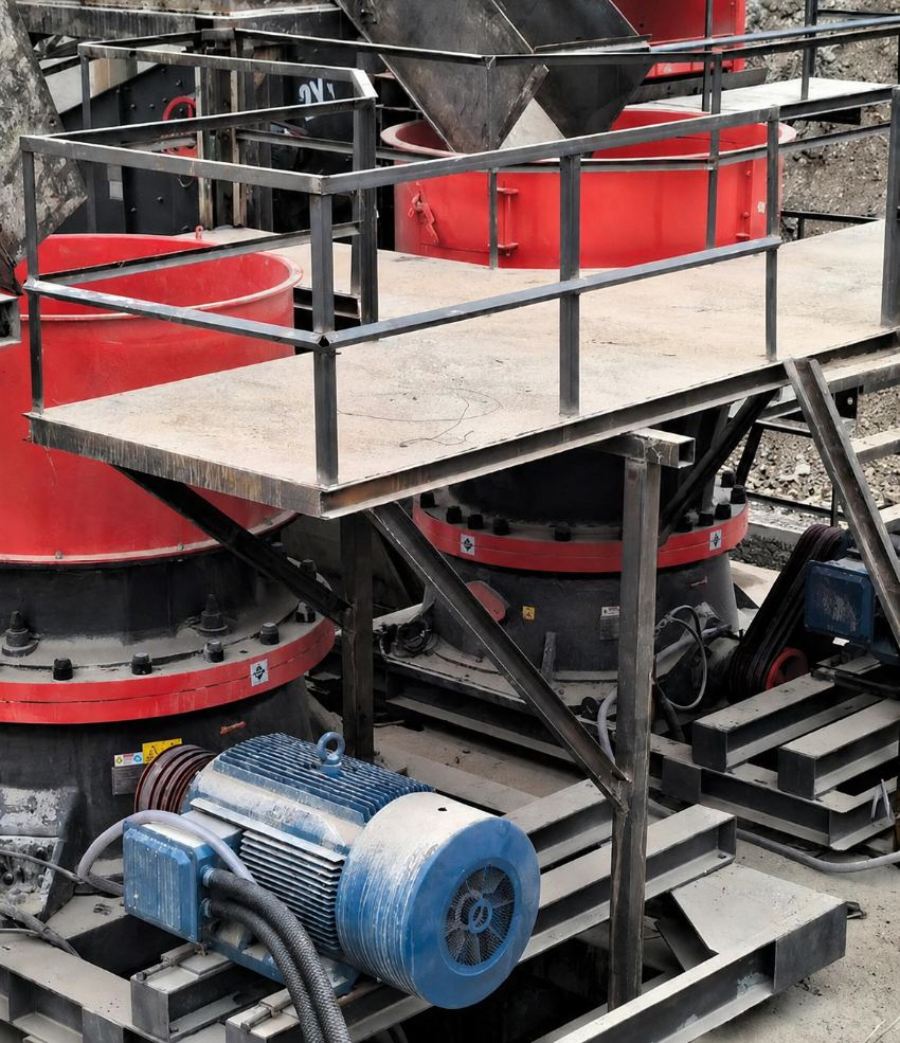
Different cone designs may crush in the same way, but adjustment, overload protection, and maintenance can work differently. That is worth bearing in mind when the operation wants to relate rock behavior to uptime, rather than simply compare one model name with another.
Single-cylinder designs suit precise steady adjustment
A trituradora de cono hidráulica de un solo cilindro is often valued when a fixed or semi-fixed line needs compact structure, automated CSS adjustment, and liner wear compensation. HiDerek’s HD Series includes 11 models and 54 cavity configurations, so the same product family can be matched to different feed and discharge goals.
Multi-cylinder designs support fast recovery
A trituradora de cono hidráulica multicilíndrica often becomes attractive when tramp iron events, chamber clearing, and liner replacement time are major concerns. HiDerek’s HD-Multi Series uses bidirectional tramp release cylinders, hydraulic chamber clearing, hydraulic motor setting adjustment, and accessible top or side maintenance points.
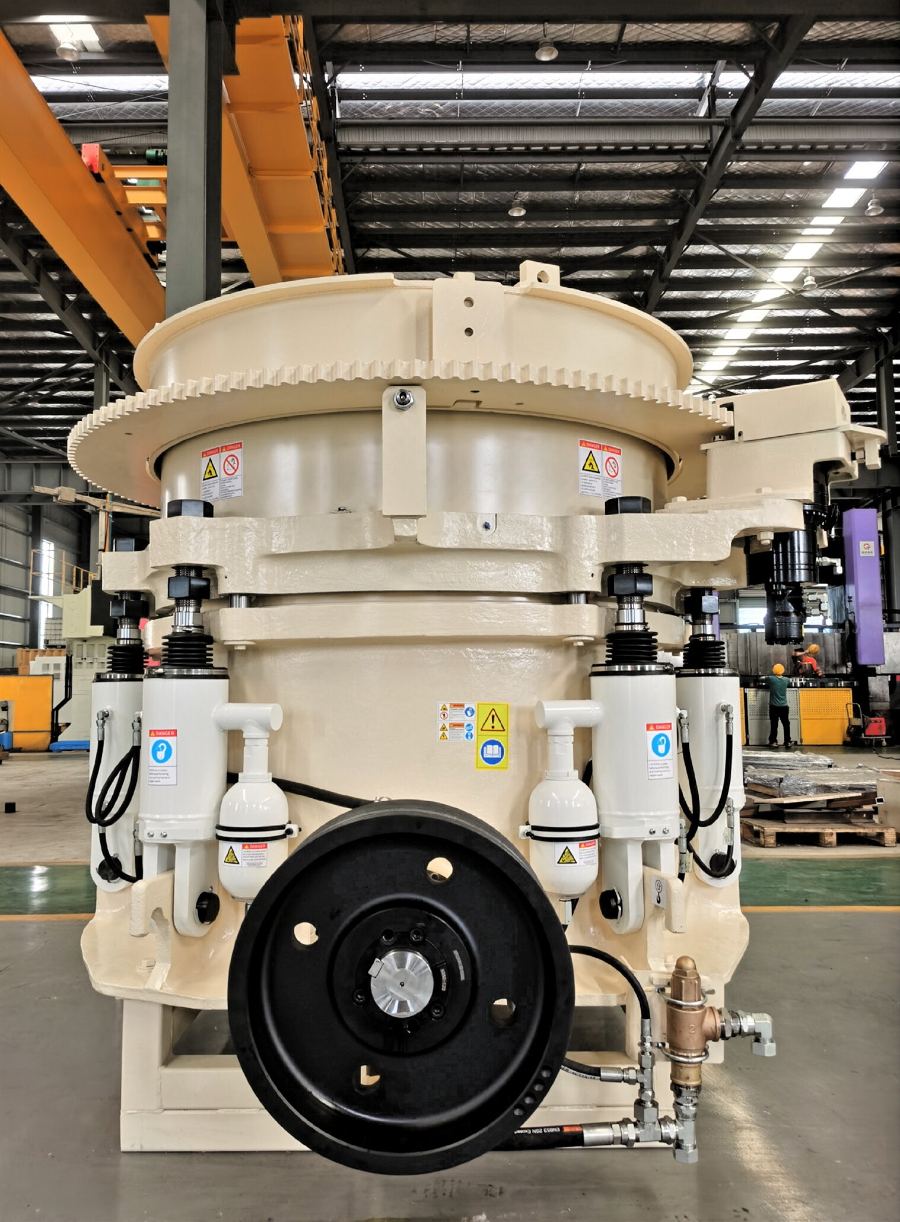
These differences should help with the application question, rather than do away with it. Both designs still need controlled feed and screening that suits the job. There must also be enough discharge area, along with a chamber chosen to suit the material being processed.
Stable Operation Makes the Principle Useful
The crushing principle needs a full, consistently fed chamber to give useful results. It is the surrounding circuit that has to keep the chamber that way. For cone crushers for mining and construction, the same machine may behave differently from one shift to another. Changes in feed arrangement, screen efficiency, conveyor capacity, moisture, and material hardness can all account for that.
A few observations can help when taking the theory out into the field:
- Track product size beside CSS changes instead of recording the setting alone.
- Keep feed distribution centered, to avoid putting most of the load on one side of the chamber.
- Remove excess fines before crushing when they start to pack the chamber or prevent material from flowing properly.
- Read a rise in return load as a sign from the screen as well as the crusher.
A stationary cone crusher gives a fixed plant a consistent basis for making these observations. The feed path, discharge conveyor, and screen return are not moved about all the time. The team can therefore compare trends, making smaller corrections with more confidence.
A Practical Takeaway for Hard Rock Lines
A cone crusher works by repeated compression. The result, however, depends on how well the chamber, CSS, liner profile, feed, and screen share one operating target. The reader’s next useful step is to link every product-size change to those control points before changing capacity expectations.
Some applications call for a source factory that can link the feed, cavity, and hydraulic control strategy to the layout of the line. For these applications, HiDerek can support single-cylinder cone crushers, customized single-cylinder cone crushers, and multi-cylinder cone crushers. This support involves configuration work specific to the product.
Preguntas frecuentes
What part of a cone crusher actually crushes the rock?
The mantle and concave create the crushing chamber. As the mantle moves eccentrically, rock is compressed against the concave and against other particles until it is small enough to discharge.
Why is CSS so important in cone crushing?
CSS is the final narrow point that strongly influences product size, capacity, and power demand. It needs to be looked at with the feed condition and screen return load, not taken as a fixed answer by itself.
Can a cone crusher handle primary crushing?
A cone crusher can sometimes act earlier in the circuit when natural feed size is already small enough. In most hard rock plants, it is used for secondary or tertiary reduction after primary crushing.
What causes poor product shape from a cone crusher?
Uneven feed, the wrong cavity, an unstable chamber level, and worn liners can all be behind poor shape. A CSS unsuited to the required product may be another cause. The cause is usually circuit-based, not one setting alone.
Is a single-cylinder cone crusher always better than a multi-cylinder model?
No. For precise adjustment and compact integration, a single-cylinder design can be a good fit. A multi-cylinder model can make more sense when tramp release, clearing speed, and maintenance access are the things that matter most.