
Large blasted rocks create a practical problem for quarry and mineral-processing teams: the next machine cannot accept them at their original size. A jaw crusher can provide that first reduction, especially with hard, abrasive feed. Its usefulness depends on what enters the chamber and what must leave it. Understanding that relationship helps operators and equipment distributors recognize where a jaw belongs in a crushing circuit.
How jaw compression breaks large rock
A jaw crusher machine breaks rock between a fixed jaw plate and a moving jaw plate. An eccentric shaft drives the moving jaw through a repeating crushing cycle. Material enters the wider top of the chamber, fractures under compression, and moves downward as space opens between the plates.
The narrowing chamber allows successive bites to reduce the rock before discharge. A concasseur à mâchoires primaire therefore prepares coarse feed for the following process stage. It does not separate valuable minerals from waste, and the discharged material is a mixture of particle sizes rather than a single finished grade.
The feed opening and discharge setting describe different limits. The opening determines which incoming lumps can enter; the closed side setting, or CSS, is the smallest discharge gap during the crushing cycle. Confusing those measurements can lead to an unsuitable machine even when its advertised tonnage appears sufficient.
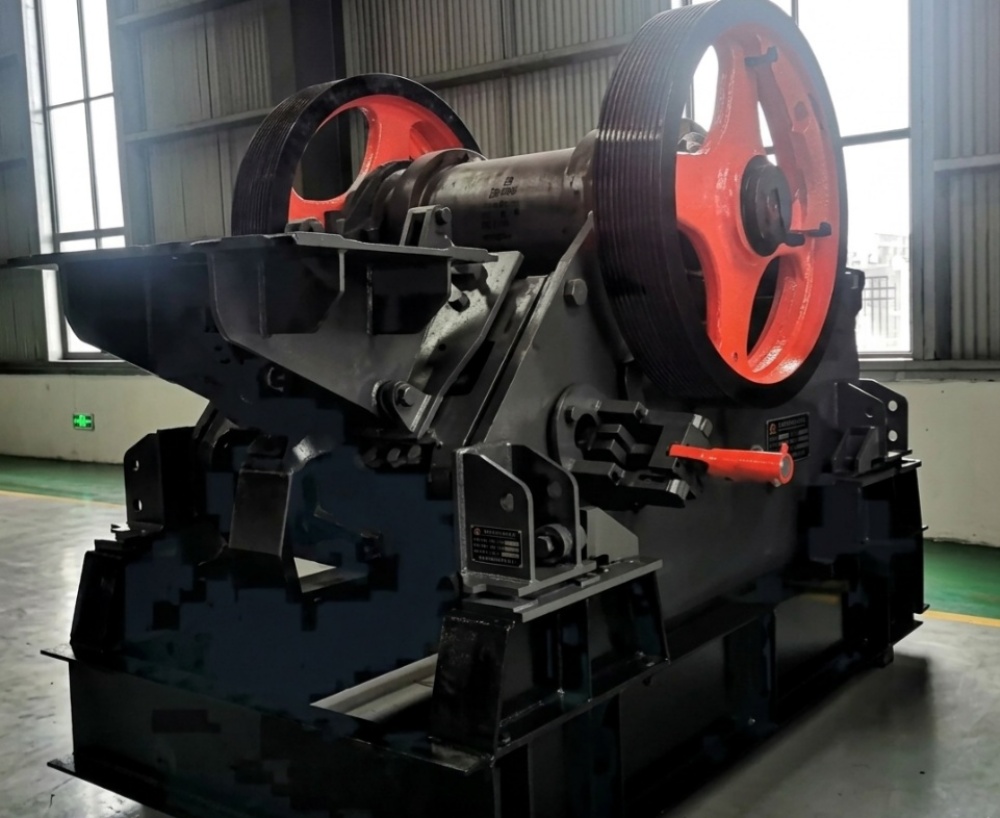
Where hard rock makes a jaw crusher useful
Hard, abrasive rock is a common reason to use jaw crushing in the first stage. Quarry stone and mineral-bearing rock need coarse size reduction before further processing. A jaw rock crusher is useful when accepting substantial lumps matters more than producing a tightly controlled final particle shape in one pass.
Rock strength needs to be considered alongside its tendency to wear the jaw plates. For this duty, HiDerek Mining Machine offers RC Series jaws for ores and rocks with compressive strengths up to 300 MPa. That figure describes the series’ material-strength scope; it does not promise the same hourly output for every rock within that limit.
A stationary rock crusher machine suits a crushing circuit organized around a fixed processing location. The conventional RC range includes RC100, whose feed dimensions and CSS-dependent capacities illustrate its application limits. A bare crusher specification should not be read as the performance of a complete mobile crushing plant.
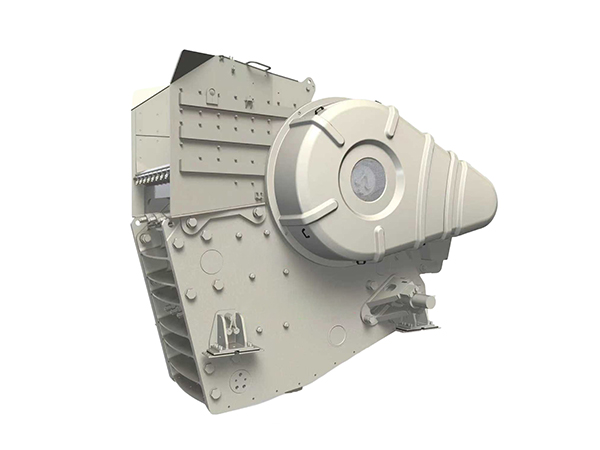
How feed size and CSS define the working range
A useful application check connects incoming lump size to the discharge needed by the next stage. The RC100 figures illustrate why both ends matter. Its opening dimensions describe chamber geometry, while its maximum feed size is a separate limit. The capacity ranges then change with CSS.
| RC100 parameter | Reference value | Practical meaning |
| Feed opening, width × depth | 1,000 × 760 mm | Describes the inlet, not the permitted lump size. |
| Taille maximale de l'aliment | 608 mm | Incoming oversize requires attention before feeding. |
| Capacity at 100 mm CSS | 200–220 t/h | A tighter setting provides the lower reference throughput. |
| Capacity at 150 mm CSS | 300–330 t/h | A wider setting allows more throughput with coarser discharge. |
These RC capacity references use a rock-density basis of 2.7 t/m³ and assume feed enters without bridging or blockage. The lower and upper values reflect differences in fine-material content. Feed grading, moisture, mud, density, friability, and feeding method can change actual output. The figures support preliminary application assessment, not a guaranteed site result.
A smaller CSS generally moves the product toward finer sizes, but it also changes the work required inside the chamber. The RC Series uses wedge-style CSS adjustment. Any change must remain within the permitted setting range for the model and jaw profile; closing the gap excessively is not a substitute for a suitable downstream process.
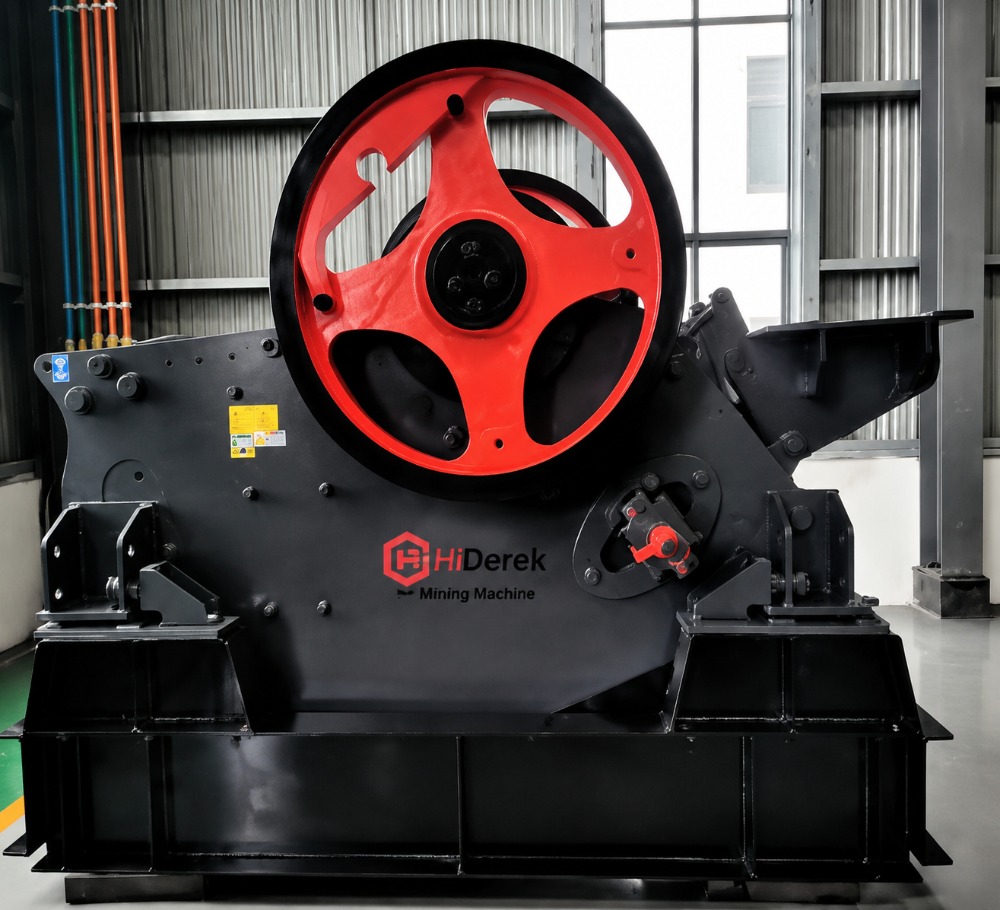
Why suitable rock can still produce poor throughput
Uninterrupted material flow is essential even when the rock falls within the crusher’s strength and size limits. Irregular slabs can bridge across the inlet, while excessive fines or sticky feed can pack the chamber. A hopper full of material is therefore not evidence that the jaw is receiving a usable feed.
Feed preparation helps keep crushing work focused on material that needs reduction. Scalping can remove particles already smaller than the discharge setting. An appropriately sized feeder must also deliver material across the chamber at a controlled rate. These conditions help distinguish a feed problem from a crusher that is genuinely too small for the duty.
The discharge path can become the limiting factor after the rock has been broken. The RC application requirements include sufficient space below the crusher and a discharge belt matched to its maximum capacity. Restricting either path undermines the benefit of a larger chamber or wider setting.
How jaw-plate condition changes the result
Jaw plates influence grip and chamber geometry as well as wear cost. The tooth profile affects how CSS is measured, so a setting has meaning only with the correct measurement method. A worn or unsuitable profile can change material flow and product grading even when the machine itself remains mechanically operational.
The relevant pièces d'usure du concasseur should therefore be matched to the jaw model and feed characteristics. Plate choice, actual setting, and observed discharge grading belong in the same application check. A fixed replacement interval cannot be inferred from rock strength alone because different feeds impose different wear conditions.
When a jaw crusher fits the job
A jaw crusher makes sense when the task is to turn large, hard feed into manageable material for the next processing stage. Confirm that the lumps fit, the required discharge is achievable at a permitted CSS, and the entire feed-to-belt path supports the needed throughput. Where final grading or shape demands further processing, assess the jaw as the first stage rather than expecting it to complete every reduction step.
FAQ
Is a jaw crusher mainly a primary crusher?
Primary reduction is its usual role, although some applications use jaws in a second stage. The feed size, required discharge, and circuit arrangement determine whether that additional use is appropriate.
Can a jaw crusher process very hard rock?
Jaw crushing is suited to hard rock, but the machine’s specified limits still apply. The RC Series scope extends to 300 MPa compressive strength; abrasiveness and feed conditions must also be evaluated.
Does CSS equal the largest discharged particle?
CSS describes the minimum jaw gap during the cycle. It influences product grading but is not a screening aperture that guarantees every discharged particle will be smaller than that measurement.
Why does a larger setting increase reference capacity?
A wider discharge gap lets material leave the chamber more readily and generally requires less reduction. The resulting product is coarser, so the next process stage must be able to accept it.
Can wet, clay-rich feed go straight into a jaw?
Sticky feed needs a specific application assessment because it can obstruct flow and pack the chamber. Rock hardness alone does not establish suitability when moisture, clay, and fines dominate the feeding behavior.