
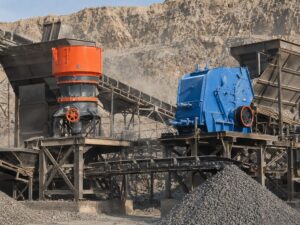
Hard rock does not automatically make every impact crusher a poor choice, yet it changes the economics sharply. The right answer depends on abrasiveness, natural fractures, the required product shape, and how much wear interruption the circuit can tolerate. This comparison helps a quarry or mine decide which breaking action fits that one duty.
The dividing line is how the rock breaks
Impact and compression create different costs as well as different particles. An impact crusher accelerates rock against blow bars or breaker surfaces, while a cone crusher squeezes it repeatedly between a mantle and concave. The better mechanism is the one that reaches the target gradation without turning wear parts or recirculating load into the hidden bottleneck.
Impact crushing follows the weakest plane
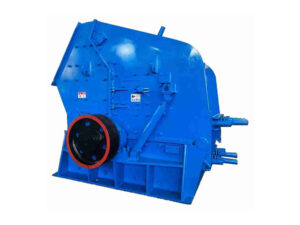
Impact crushing can open existing fractures quickly and often produces a more cubical particle from suitable feed. A máy nghiền va đập cố định is worth examining when the rock is hard but not severely abrasive, or when shape improvement justifies closer wear monitoring. High silica or highly abrasive ore can consume blow bars rapidly, so hardness alone is an incomplete description.
Cone crushing controls hard, abrasive duty
Cone crushing keeps the rock under compression and generally gives wear parts a more predictable life in hard, abrasive applications. A máy nghiền côn thủy lực also allows the closed-side setting to be adjusted as the circuit target changes. Its advantage weakens when the feed is badly segregated or starved, because an uneven chamber cannot produce a stable result.
Hardness alone cannot make the choice
A hardness value describes resistance to indentation; it does not fully describe how a rock will fracture or wear metal. Abrasiveness, moisture, clay, feed top size, and the amount of material already below the setting all change the operating picture. A short sample test or reliable site history is more useful than a label such as “hard granite.”
| Operating signal | Impact crusher case | Cone crusher case | Question to settle |
| Abrasiveness | Low to moderate | Moderate to high | How fast did similar rock wear metal? |
| Product shape | Strong cubical-shape priority | Controlled gradation priority | Is shape or wear cost the binding target? |
| Feed condition | Consistent feed with limited tramp | Well-graded, choke-fed chamber | Can the feeder hold a steady load? |
| Circuit effect | More fines may reduce later shaping | Closed circuit controls top size | Can the screen absorb the return load? |
The table is a filter, not a verdict. A hard limestone with clear fracture planes may behave well under impact, while an abrasive quartz-rich feed usually pushes the decision toward compression. The real comparison should use the same feed sample, target screen cut, and operating hours so each option is judged against the same outcome.
Product shape and wear pull in opposite directions
A cubical product has value only if the plant can afford the wear required to make it. Impact crushing may reduce flaky particles and create useful fines, but those benefits can be expensive in abrasive hard rock. Cone crushing usually protects wear economics, although the chamber, eccentric throw, and closed-side setting must be matched to the desired curve.
When impact still earns a place
An impact route remains credible when three conditions line up:
*The feed is hard but has manageable abrasiveness and predictable fractures.
*Cubical shape or fines generation has measurable downstream value.
*Wear-part access and replacement windows fit the production schedule.
When the cone holds the advantage
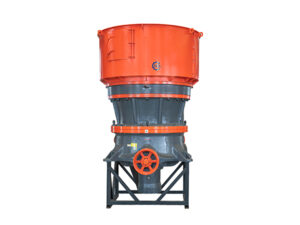
A cone route becomes stronger as abrasiveness, duty hours, and the cost of unplanned stops rise. Single-cylinder designs can suit secondary or tertiary work that needs compact hydraulic control. A máy nghiền hình nón thủy lực nhiều xi lanh adds bidirectional tramp release and hydraulic chamber clearing, useful where uncrushable material or a stalled chamber would otherwise lengthen recovery.
Feed consistency decides whether either machine looks good
Stable feeding turns the mechanical choice into repeatable production. An impact crusher needs controlled feed so the rotor is not alternately starved and overloaded. A cone needs an even, preferably choke-fed chamber; segregation around the circumference changes pressure, product size, and liner wear. The feeder therefore belongs inside the crusher decision, not after it.
A useful comparison file can stay brief. Record the maximum feed size and full size distribution, rock abrasiveness and moisture, required product curve, duty hours, tramp-material history, and screen arrangement. Those facts reveal whether the quoted capacity rests on conditions the actual circuit can maintain.
A practical decision for a hard-rock circuit
For highly abrasive hard rock with long duty hours, the cone is usually the safer starting point. For less abrasive rock where product shape carries strong value, impact crushing deserves a controlled trial. If neither description is clear, compare wear cost per finished tonne and screen return load rather than choosing from nominal throughput alone.
That is also where HiDerek Mining Machine fits the decision. As a source factory, we focus our main crusher supply on single-cylinder cone crushers, customized single-cylinder cone crushers, and multi-cylinder cone crushers. The HD single-cylinder range offers 11 models and 54 cavity configurations with automated setting control, so customization can follow the feed and product instead of becoming an unfocused feature list.
The mechanism must serve the product and wear budget
Impact crushing is not ruled out by hard rock, but its shape advantage must repay its wear exposure. Cone crushing is normally stronger for abrasive, continuous duty, provided the chamber receives consistent feed and the screen can control recirculation. Decide with representative material and a defined product curve, then compare the cost of producing that finished tonne.
If your feed data and product target are ready, share them through our điều tra kỹ thuật. We can help narrow the route before model selection begins.
Câu hỏi thường gặp
Is a cone crusher always better for hard rock?
No. A cone is generally favored for abrasive, continuous hard-rock duty, but a less abrasive fractured rock may justify impact crushing when cubical shape has clear value.
What are impact crushers best at producing?
Impact crushers are often selected for cubical aggregate and for breaking material along natural fractures. The wear cost must still be tested with the actual rock.
Does an impact crusher make more fines than a cone crusher?
It often can, because high-speed impact creates multiple fracture events. Whether those fines are useful or waste depends on the product specification and the screen circuit.
Why does choke feeding matter to a cone crusher?
Choke feeding keeps the chamber evenly loaded. Stable pressure improves gradation and liner utilization, while starved or segregated feeding can produce uneven wear and variable output.