
A running jaw crusher can still leave the rest of a quarry waiting for stone. For plant operators and technical distributors, the useful question is where productive time disappears: at the feed opening, inside the chamber, or below the discharge. Improving performance means finding that restriction, correcting it, and checking whether more usable material actually reaches the next stage.
Production losses leave different clues
Shift output depends on both crushing rate and time spent crushing. A brief peak on the belt scale cannot explain a poor daily total. Record tonnes over the same operating period alongside feed interruptions, crusher stops and downstream delays. Separate time waiting for rock from time spent clearing a blockage; these losses need different remedies.
Material changes also affect the comparison. A stationary jaw crusher handling wetter, muddier feed may behave differently at yesterday’s setting. Compare runs with similar feed grading and rock properties before judging an adjustment. Otherwise, an easier feed can make an ineffective change look successful.
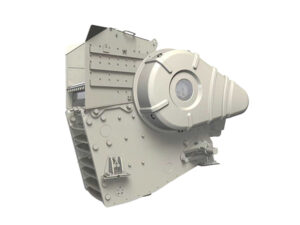
A clear feed opening needs a controlled supply
Bridging interrupts crushing before the jaws can do useful work. One oversized lump can obstruct the opening, but several smaller stones can also interlock. Record the shape and frequency of bridging material as well as its size. Repeated flat slabs call for a closer look at upstream fragmentation and jaw grip, not simply a faster feeder.
A primary jaw crusher needs a feed arrangement that uses the available chamber width. Check whether the feeder delivers an even stream or sends batches onto one side. Adjust feed delivery within the equipment’s operating instructions, and keep oversized material out before it reaches the chamber. A blockage requires the site’s approved clearing and isolation procedure.
Machine capability must be interpreted alongside those feed conditions. HiDerek Mining Machine’s RC Series processes ores and rocks with compressive strengths up to 300 MPa. That strength limit does not predict tonnes per hour: grading, moisture, mud content and crushability still affect output. The RC chamber’s symmetric V shape supports material entry, while controlled feeding remains necessary to use it effectively.
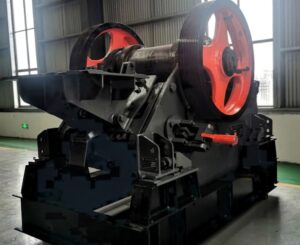
Discharge flow sets the limit on useful adjustment
Material must leave the crusher freely before extra feed can become extra production. Check for accumulation beneath the jaws, restricted chute space and a discharge belt that cannot clear the flow. An industrial rock crusher operating in a fixed plant remains dependent on this discharge route. Increasing feeder speed will not correct a conveyor bottleneck.
The closed side setting, or CSS, controls the narrowest discharge gap during the crushing cycle. A smaller setting generally produces finer material, but the resulting capacity and load depend on the application. Match the setting to the next stage’s feed requirements and the crusher’s approved operating range. The smallest available gap is not automatically the most productive choice.
RC Series crushers use wedge-style CSS adjustment. The practical benefit is a defined way to change the opening, but a reliable trial also needs a consistent measurement method. Jaw tooth geometry affects how the setting is measured. Use the model-specific procedure, then compare discharge grading and sustained throughput before making another change.
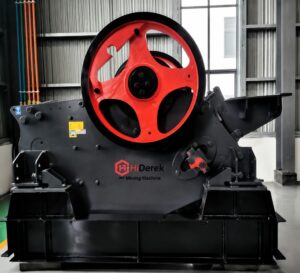
Jaw profile and wear determine whether rock grips
Jaw plates form the working chamber, so their profile affects material movement as well as service life. Hard, abrasive rock and slabby feed place different demands on the teeth. When reviewing crusher wear parts, consider feed shape, abrasiveness and required discharge size together. Selecting solely for maximum thickness can reduce the space available at the inlet.
Worn teeth can explain declining performance even when the feeder and setting appear unchanged. Inspect the fixed and moving plates for lost profile and uneven wear during planned, isolated maintenance. Track their condition against comparable production periods. A steadily falling rate provides a stronger reason for intervention when the feed and downstream capacity have stayed consistent.
Replacement timing should reflect useful production across the wear cycle. Follow the approved turning or replacement criteria for the fitted plates; some designs permit rotation, but this is not universal. Tightening the CSS to compensate for poor grip can conceal the underlying wear problem. Confirm the chamber condition before treating another setting change as the solution.
A controlled trial reveals the actual improvement
One change at a time makes the result interpretable. After correcting the dominant restriction, compare a representative run with the baseline using the same tonnage measurement point. Record the setting, material condition and interruption time. Check the discharged size distribution as well as the rate, because extra tonnes are useful only when the next stage can handle them.
A successful correction improves sustained flow without transferring the problem downstream. If bridging falls but belt accumulation rises, discharge capacity is now limiting the trial. If flow stays clear while output declines over the liner cycle, revisit the jaws. This sequence gives operators a reason for the next adjustment instead of encouraging repeated changes without diagnosis.
Steadier tonnes begin with the actual restriction
Better jaw crusher performance comes from maintaining a clear path through the feed opening, crushing chamber and discharge. Establish comparable operating data, resolve the visible restriction, then verify throughput and grading together. For a fixed RC installation, that approach connects feed control, CSS adjustment and jaw condition to the practical goal: reliable material supply to the next stage.
FAQ
Why does a jaw crusher lose capacity without stopping?
Intermittent bridging, uneven feeding or restricted discharge can reduce material flow while the machine continues running. Compare feed interruptions and discharge conditions with the belt-scale record.
Will a smaller CSS always improve production?
A smaller CSS changes discharge grading but does not guarantee higher output. Evaluate it against the approved operating range, material characteristics and the next stage’s feed requirements.
Should fines enter the jaw crusher?
Material already smaller than the CSS may bypass crushing through suitable upstream scalping. Assess feed grading and the intended fines route; do not remove a useful product stream without accounting for it.
How do jaw plates affect throughput?
Tooth profile and wear influence grip and chamber geometry. A profile unsuited to the feed or worn unevenly can restrict movement and reduce effective crushing capacity.
Which result matters most after an adjustment?
Compare sustained tonnes and discharge grading under similar feed conditions. Include interruption time so a short high-rate run does not hide a lower productive total across the shift.