

A cone crusher is not selected because one type is universally better. Start with the material leaving the crusher: a broad secondary product, a controlled fine product, or output from a mobile plant. Once that target is clear, the types become easier to separate.
Four types answer different production pressures
The names describe more than a hydraulic layout. They point to different priorities in a crushing circuit: compact stationary control, high-force fine crushing, broad hydraulic automation, or site mobility. A plant team that starts with those priorities can rule out poor fits before comparing model numbers.
Single-cylinder hydraulic cone crushers
A single cylinder hydraulic cone crusher is a sensible route for a fixed secondary or tertiary stage that needs a compact footprint and steady adjustment. One main hydraulic cylinder supports setting changes and overload protection, while cavity and feed still determine product consistency. This type suits teams that value direct control without building the whole decision around a highly complex machine.
Multi-cylinder hydraulic cone crushers
A multi-cylinder hydraulic cone crusher earns attention when fine product quality, pressure under hard duty, or fast recovery from uncrushable material has a real operating cost. Multiple release cylinders support the crushing action, and the design commonly offers more precise setting and cavity flexibility. It is usually considered deeper in the circuit, where the downstream screen and the required particle shape make small setting changes meaningful.
Fully hydraulic and mobile cone crushers
Fully hydraulic cone crushers place a larger share of adjustment and protection in the hydraulic system, so they can suit variable feed conditions where operators need responsive control. Mobile cone crushers solve a different problem: they mount the crushing stage in a transportable plant for work that moves between sites. Mobility can be valuable, but feed size, reduction duty and screen capacity still must match the product.
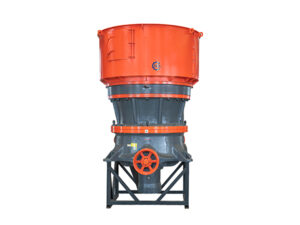
Let the target gradation make the first cut
Product requirements should narrow the field before capacity figures enter the conversation. A coarse or intermediate product often rewards a simple, stable stationary arrangement. A finer product with strict shape requirements puts more weight on chamber selection, liner behavior and closed-circuit screening. The table keeps that choice tied to the output rather than to a familiar equipment label.
| Product situation | Type to investigate first | Why it fits | Check before deciding |
| Stable secondary or tertiary output | Single-cylinder hydraulic | Compact layout and automated CSS control | Feed top size, cavity, CSS and liner plan |
| Fine, shape-sensitive aggregate | Multi-cylinder hydraulic | High-force crushing and setting flexibility | Screen loop, feed distribution and recovery needs |
| Changing feed with a fixed plant | Fully hydraulic | Responsive protection and adjustment | Hydraulic service plan and usable setting range |
| Short campaigns or changing locations | Mobile cone crusher | Crushing stage moves with the work | Transport, feed preparation and site screen capacity |
Feed behavior decides whether the choice will hold
A product target tells you where to look; the feed tells you whether that option will stay productive. Segregated feed, excessive fines, sticky material and uneven loading around the chamber can all change the result. A stationary cone crusher performs as part of a circuit, so its feeder, pre-screen, conveyor and return screen deserve the same attention as the crusher itself.
Four facts make supplier discussions useful
Bring a short operating picture to the comparison. It prevents a nominal capacity or a popular model name from becoming the entire decision:
- Maximum feed size and the actual size distribution
- Rock hardness, abrasiveness, moisture and clay content
- Target product curve, particle-shape expectation and CSS range
- Screen arrangement, duty hours and any tramp-material history
Once those conditions are known, HiDerek Mining Machine becomes relevant to the choice. We offer fixed-crusher families that cover both single-cylinder and multi-cylinder routes. Our single-cylinder range has 11 models and 54 chamber configurations, while our multi-cylinder designs use bidirectional tramp release and hydraulic chamber clearing. Those features matter only when they answer a proven circuit need.
For a plant that needs a compact fixed stage, review our single cylinder hydraulic cone crusher options against the expected feed and product. For a fine-crushing stage that needs flexible recovery and liner work, compare a multi-cylinder hydraulic cone crusher against the screen loop and maintenance access. In either case, the opening, cavity and feed distribution should be confirmed together.
Avoid the selection mistakes that show up later
The most common mistake is choosing a type from the desired tonnage alone. Capacity tables depend on material density, feed condition, cavity and circuit configuration, so they are a starting point rather than a promise. Another mistake is treating a smaller CSS as a standalone way to make a finer product. It can change the product, but it also changes the load, liner wear and the demands placed on the screen.
The better question is whether the entire circuit can support the selected type at the required product target. That is why a stationary cone crusher should be compared with its feed arrangement and discharge path, not as an isolated machine. The right type is the one that keeps the intended product stable during normal variation, not merely during an ideal test run.
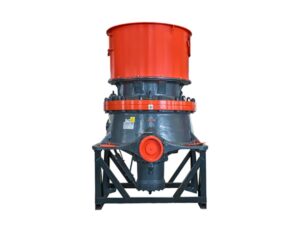
The durable choice starts with the product
Use the four types as a practical filter. Single-cylinder hydraulic machines suit compact stationary control; multi-cylinder machines are strong candidates for fine, shape-sensitive work; fully hydraulic designs suit responsive control needs; and mobile machines answer a location problem. Then verify the feed, screen and CSS together. That sequence gives the selected cone crusher a fair chance to meet the product target day after day.
When the feed data and target gradation are ready, we can help match them to a suitable crushing route. Send the operating conditions through our engineering inquiry so the conversation begins with the circuit rather than with a generic model request.
FAQ
Which cone crusher type is usually used for fine crushing?
Multi-cylinder hydraulic cone crushers are often investigated for fine-crushing duties because their settings and cavities can be matched closely to a shape-sensitive product. The final choice still depends on feed size, material behavior and the screen circuit.
Is a single-cylinder cone crusher only for soft rock?
No. A single-cylinder cone crusher can work in demanding duties when its cavity, feed preparation and setting fit the material. Rock hardness alone is not enough to select it; abrasiveness, moisture and reduction duty also matter.
What is the role of CSS in cone crusher selection?
CSS is the closed-side setting, or the smallest opening during a crushing cycle. It influences product size, but it must be considered with cavity shape, feed distribution, liner condition and downstream screening.