
A quarry may need both a jaw crusher and a cone crusher, each doing a different job. Large incoming rock must first become suitable feed for the next stage; finer aggregate then needs the right size distribution and shape. For engineers and equipment distributors, these nine differences explain where each machine belongs in a fixed hard-rock circuit.
Two compression motions, different crushing duties
Reciprocating versus gyrating action
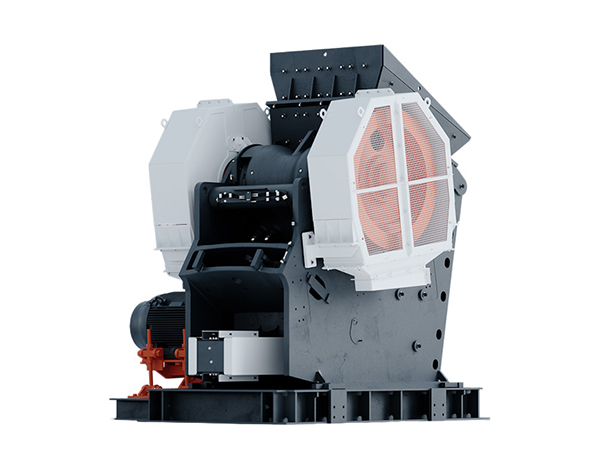
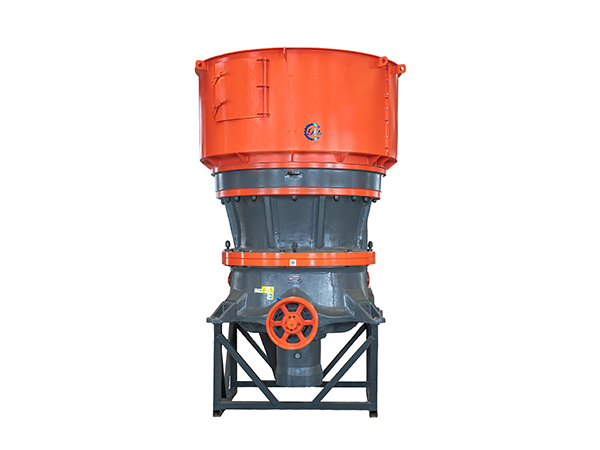
A jaw rock crusher breaks material as its moving jaw approaches the fixed jaw. The return movement opens the chamber again. A cone instead uses a mantle that gyrates eccentrically inside a stationary concave, creating compression around the chamber as the gap narrows.
The cone also compresses particles against one another within the material bed. This makes chamber loading part of the crushing process itself. The distinction matters when assigning a machine to a duty: matching a feed opening alone does not establish how well that feed will be reduced.
Feed size determines the position in the circuit
Primary versus secondary roles
Jaw crushers commonly take the first reduction duty, breaking large rock into material that can move through the downstream circuit. Cones commonly provide secondary or tertiary reduction. A cone can be the first crusher when naturally small feed suits its chamber, so the sequence depends on the material arriving at the plant.
Feed limits belong to individual models
Feed acceptance needs checking at model level before selecting either machine. HiDerek Mining Machine offers the RV409 jaw and RH430 HD single-cylinder cone as examples with different feed limits. Their specifications illustrate distinct duties; they are not a comparison at equal throughput.
| Model and duty | Maximum feed size | Motor power |
| RV409 jaw | 550 mm | 75 kW |
| RH430 HD single-cylinder cone | 214 mm | 132 kW |
The RV409 opening measures 895 x 660 mm, while its maximum feed size is 550 mm. Opening dimensions and acceptable lump size are different measurements. A feed containing pieces above 214 mm would exceed the RH430 limit, even though that cone has the higher motor rating.
The cone motor figure applies to standard operating conditions. Application duty and altitude need checking when finalizing motor selection. These figures establish individual equipment limits; they do not establish a tested production rate or prove that one model is more efficient.
Product requirements govern further reduction
Coarse reduction versus a finer product target
A primary jaw is commonly selected to make large feed manageable for the next operation. A cone takes suitable smaller feed toward a finer product distribution. The required reduction therefore belongs to the whole circuit. Comparing the two machines without specifying their incoming and outgoing material can produce a misleading shortlist.
Particle shape depends on the crushing conditions
Jaw product can contain elongated pieces, but the rock and jaw-plate profile affect the result. A jaw does not automatically produce unsuitable aggregate. Cone crushing can improve cubical shape when its chamber and feed conditions suit the duty. Neither crusher name guarantees a particular shape specification.
The required screened product is the useful basis for comparison. Check the size fractions and particle shape that the customer actually needs. If jaw output already satisfies that requirement, a further cone stage needs a clear purpose, rather than being included simply because another plant uses one.
Setting adjustment and compensation for wear
Closed side setting, or CSS, controls the smallest discharge gap during the crushing cycle. The HD single cylinder hydraulic cone crusher uses PLC-controlled hydraulic adjustment and automatic compensation for liner wear. These functions help manage the setting as the liners change.
Jaw adjustment depends on the design, with gasket and hydraulic adjustment options in the RV range. For both machines, CSS influences product gradation rather than making every particle that size. The comparison should consider the adjustment method and resulting product distribution together.
Feeding and wear shape operating demands
Feed distribution across the chamber
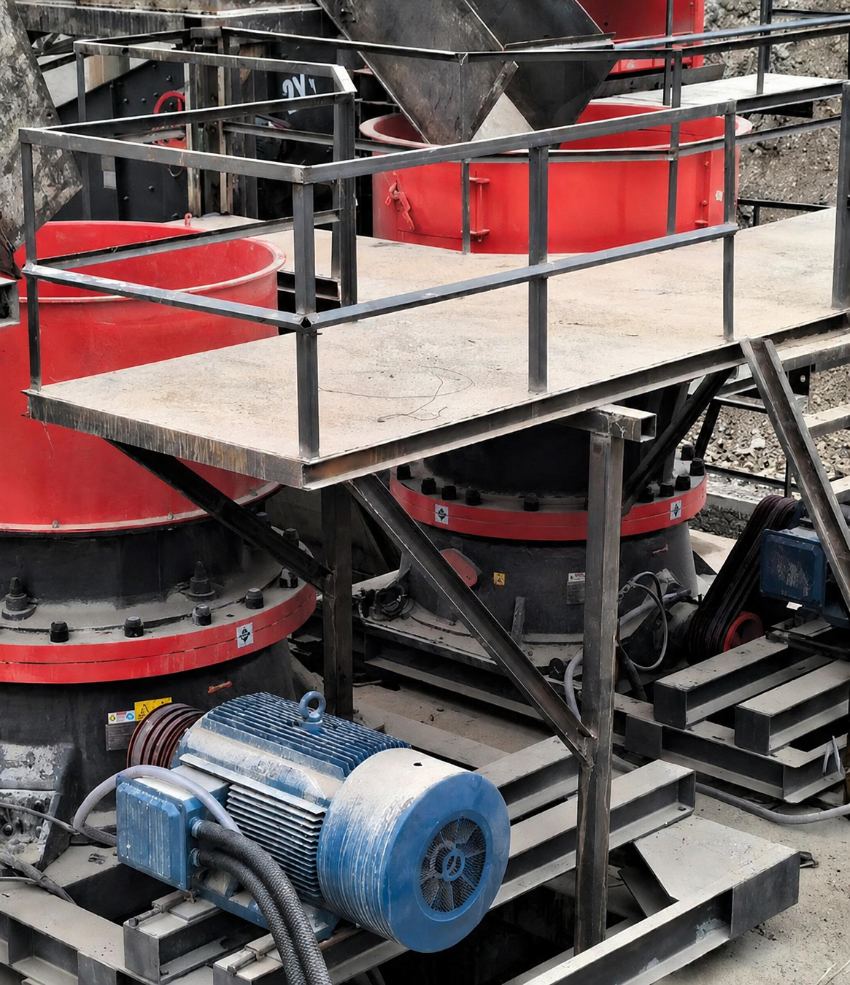
A jaw needs controlled feed and enough discharge space to keep material moving. A cone needs stable feed distributed around its chamber, with choke feeding managed to the model’s requirements. Intermittent or one-sided cone feeding can undermine the material bed on which its crushing action depends.
The connection between stages therefore deserves attention. Jaw discharge is a size distribution, so check its oversize fraction against the selected cone chamber. Screening or other feed preparation may be needed. Fines, moisture and clay also affect performance; the largest lump is only one part of the feed assessment.
Wear surfaces and maintenance priorities
Jaw wear attention centers on the jaw plates and their supporting components. The RV range includes replaceable backing plates and a centralized grease manifold. Cone wear attention centers on the mantle and concave. Actual replacement intervals depend on the material and operating conditions, so neither design earns a universal wear-life advantage.
Installed power versus useful output
A cone rock crusher with a larger motor is not automatically the higher-output choice. Installed kW describes the motor rating, not tonnes per hour or energy consumed per tonne. Compare production under matching feed and product requirements before drawing conclusions about operating efficiency.
The right choice follows the material through the circuit
The practical decision is to match each reduction duty to the incoming rock and required screened product. Use a jaw where large-feed reduction is needed, then assess whether a cone is needed for further reduction or shape improvement. Confirm the connection between stages before treating either machine as a substitute for the other.
FAQ
Can a cone crusher take quarry feed directly?
It can when the feed size and distribution suit the selected chamber. Large blasted rock commonly needs primary reduction first. Check the actual feed rather than assuming a quarry always requires the same sequence.
Can a jaw crusher produce saleable aggregate?
Yes, when its screened output meets the required grading and shape specification. Further crushing is justified by an unmet product requirement, not by the crusher’s name alone.
Does CSS equal every output particle’s size?
No. CSS is a mechanical setting that influences a distribution of particle sizes. It is not a screen aperture, and product grading still needs checking.
Does jaw discharge always fit a downstream cone?
No. Check the largest pieces and overall grading against the cone’s permitted feed. The jaw setting alone does not prove that the entire discharge stream is suitable.
Does a higher kW rating mean more tonnes per hour?
No. Feed characteristics, chamber configuration and settings also affect throughput. Power ratings from machines doing different reduction duties cannot establish a fair production comparison.